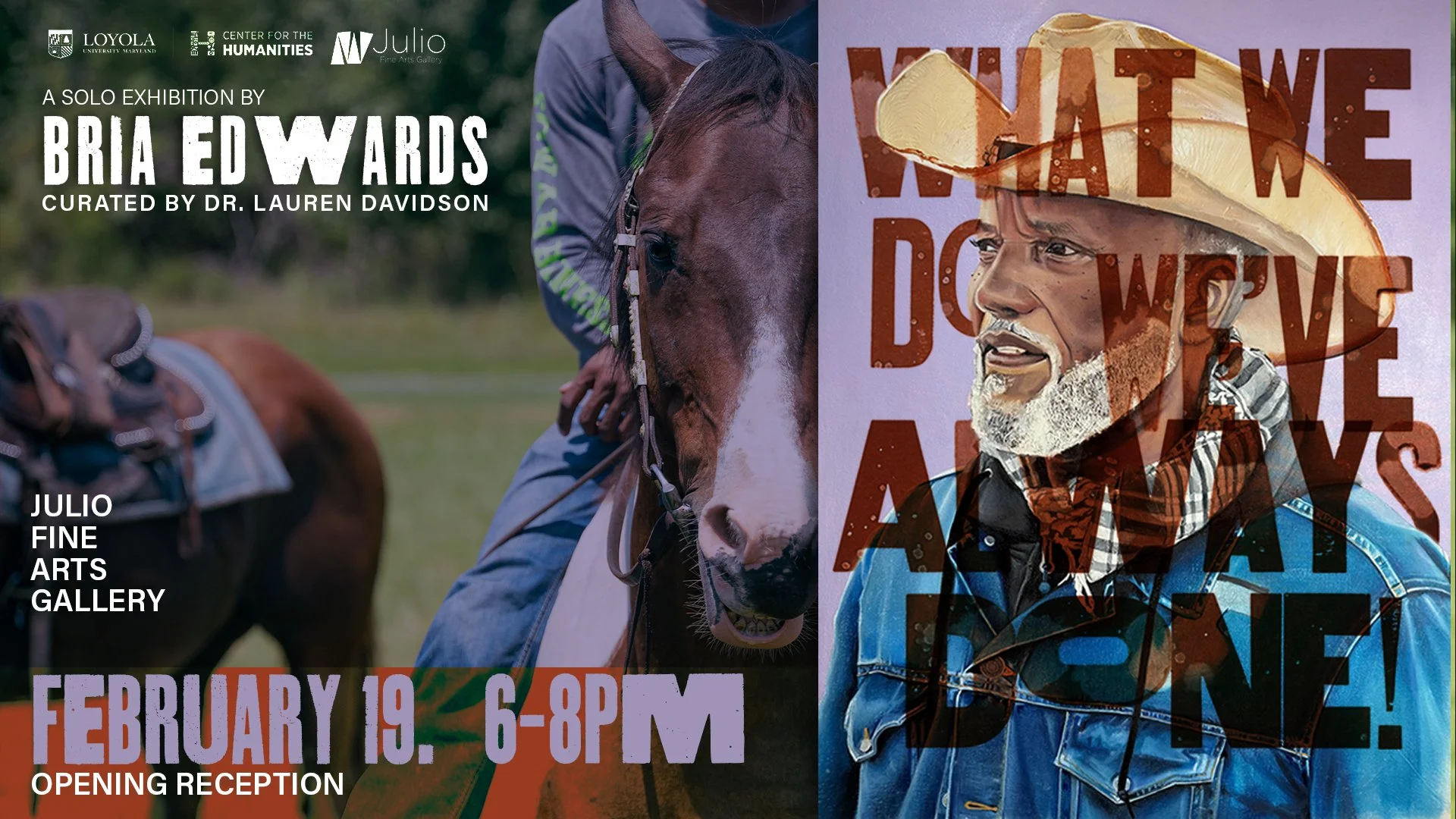
What We Do, We’ve Always Done, A Solo Exhibition by Bria Edwards
Exhibition on View: February 19 - March 27, 2026
Opening Reception: Thursday, February 19, 6-8PM
Artist Talk & Conversation: March 19, 6:30PM *4th Floor Programming Room
What We Do, We’ve Always Done is an evocative exploration of the rich and often overlooked history of Black equestrian culture in Maryland, created by artist Bria Edwards. This exhibition is a continuation of Edward’s intimate look at the concept of Black leisure and the culmination of two years of deep, immersive research, including candid interviews with Black equestrians who continue to shape and preserve this vital tradition. Through her powerful canvases and photographic works, Edwards brings to light the nuances of the Black Cowboy, celebrating their vibrancy, struggles, and their deep connection to Maryland and rural landscapes across the country.
The exhibit is an emotional and visual journey into the lives of Black horsemen and women whose ancestral ties to the land go beyond labor, connecting the dots between history, community, and identity. From the era of enslavement when Black people were forced into roles as skilled horsemen on plantations, to the present day where Black equestrians continue to create space for themselves within a cultural landscape not always seen as for them, Edwards’ work highlights the resilience and strength of these often forgotten communities.
Through a combination of vivid oil paintings, photographic documentation, and moments captured on film, the exhibition delves into the individual stories of the riders she encountered, their relationships with their horses, and the significance of this bond within the broader narrative of Black cultural expression. The works are not only an artistic celebration but also a profound gesture of reclamation—one that shifts the narrative of Black identity to one of joy, familial resilience, and pride.
Each canvas offers a meditative reflection of the riders, captured with an eye for both the power and grace inherent in their actions. The portraits, some raw and unfiltered, others ethereal in their quietude, invite viewers to reflect on the relationship between the subjects and the horses, offering insight into the symbiotic nature of this partnership. Edwards’ photography, shot at equestrian centers and in open spaces, emphasizes the freedom, the confidence, and the quiet defiance of these Black riders—individuals who refuse to be relegated to the margins of history.
What We Do, We’ve Always Done not only reveals the stories of the Black horse riders of Maryland but also contributes to a larger dialogue about generational traditions that exist beyond racial oppression and the ability to choose your joy. The exhibition challenges misconceptions, urging viewers to reconsider the legacies of equestrianism, cowboy culture, and America itself.
This show invites all who encounter it to honor the perseverance and brilliance of Black equestrians, to reflect on the ways in which the past shapes the present, and to recognize the profound and enduring presence of Black identity in all facets of American culture. Bria Edwards' work is not just a depiction—it is a reclamation of space, history, indelible joy, and heritage, reminding us all that the story of this country is incomplete without the story of Black riders.
Dr. Lauren Davidson, Curator
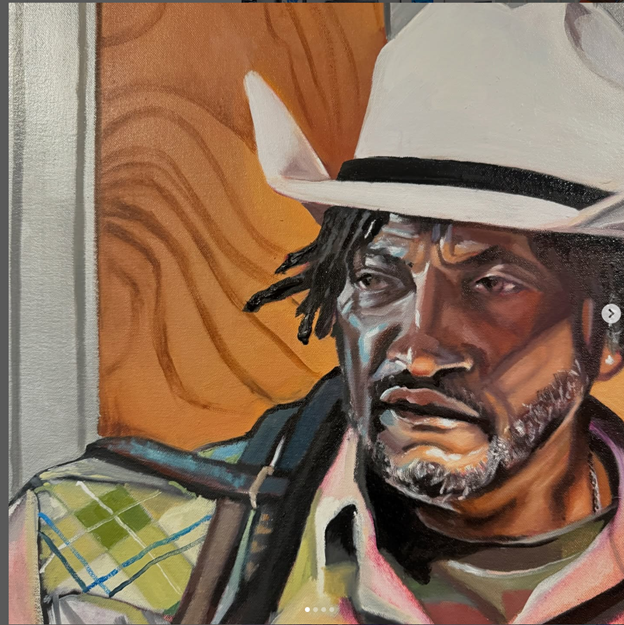
Detail, Ask About Me, 2026
Oil paint, silver foil on canvas, 60 x 80 inches
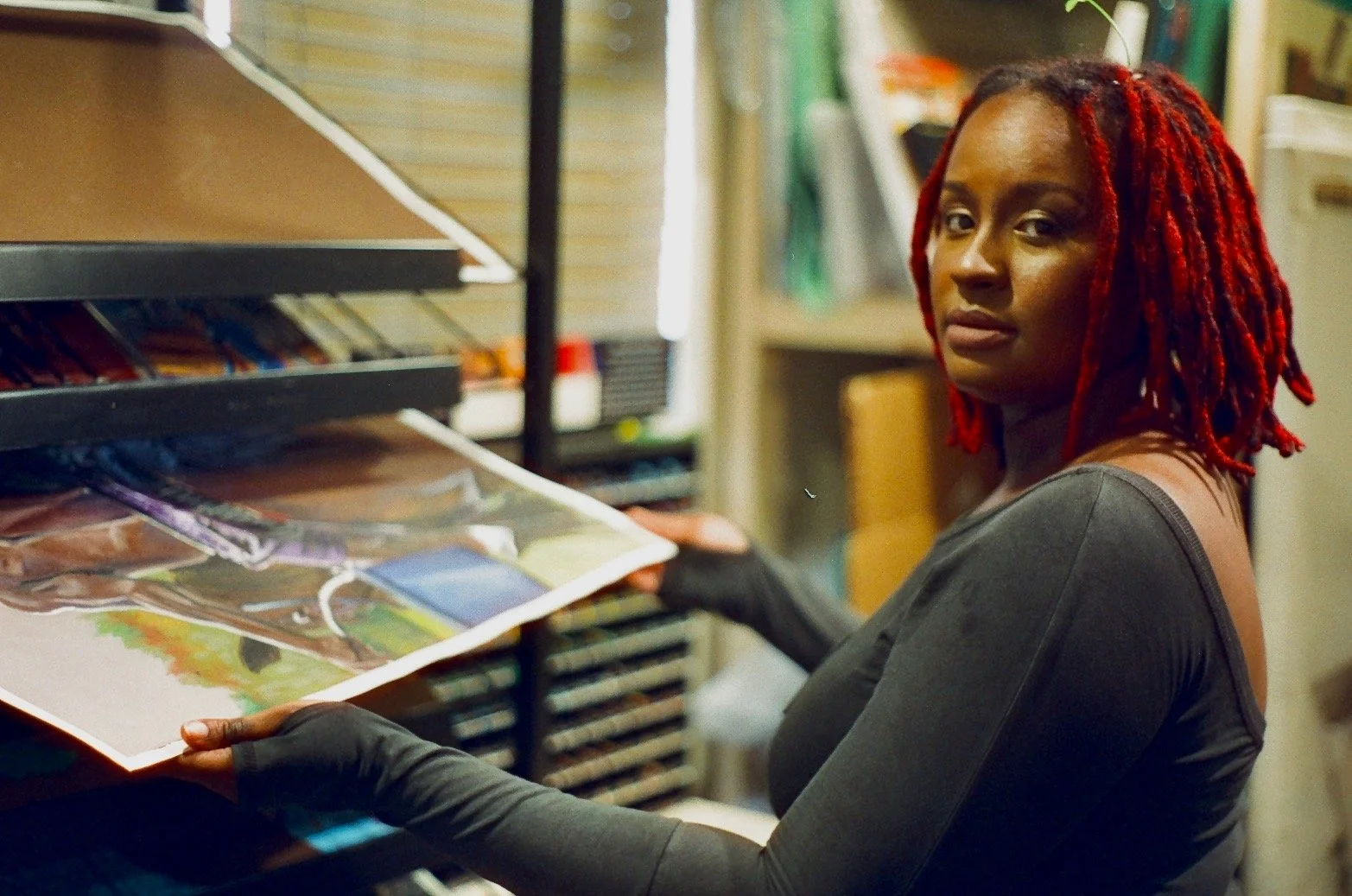
Bria Edwards, in her studio
My practice centers on holding space for stories that are often overlooked. Through photography and painting, I engage themes of legacy, community, and leisure, approaching each subject with care, attentiveness, and respect. I am committed to being fully present with the people I photograph, allowing time, trust, and proximity to shape how their stories are told.
When I began researching this body of work, my photography centered on Black equestrians navigating English riding spaces shaped by discipline, formality, and tradition. Initially, I was simply excited to witness and document Black presence on horseback, and that sense of discovery carried the work forward. Over time, I became increasingly aware that these environments carried specific histories and expectations that emphasized conformity and restraint, which felt misaligned with my interest in autonomy, cultural expression, and broader narratives of Black experience. Once I was introduced to Western riding, I found myself drawn toward a style in which the relationship between rider and horse feels more intuitive and open, emphasizing freedom of movement, utility, and endurance. This shift was not a rejection of one style in favor of another, but a recognition of where I felt a deeper sense of belonging, rooted in the understanding that Black riders have always been central to the history of the American cowboy. Western riding offered a visual and cultural language that aligned more closely with my process, allowing my documentation to move nearer to the rhythms, values, and expressions I seek to understand and preserve.
This work continues through sustained engagement with trail rides and local stables, where Black horsemen and women gather, work, and pass down knowledge through daily practice and shared experience. I spend extended time within these spaces, observing how skills are taught, how horses are cared for, and how community forms through shared labor and responsibility. I do not direct scenes or impose structure. Instead, I allow the pace of the ride, the physical demands of the stable, and the quiet moments in between to guide the images I make. The camera becomes a tool for close attention, recording gesture, posture, and relationship as they naturally unfold.
From these photographs, I develop paintings that extend the life of the image. Through layered texture, realism, and a saturated palette, the portraits take on a heightened physical presence. The compositions are direct and assured, challenging narrow perceptions of Black leisure while reflecting the vitality and depth of Black cultural expression. Though bold in form, each work carries an underlying sense of ease, offering space for joy, rest, and continuity within Black equestrian life.
About the Artist
Bria Edwards is a Washington, D.C. native who has spent over a decade scouting and scaling the visual arts circuit before finally finding her voice. She strives to debunk the monolithic myths about Black people.Working through the Black female lens, Edwards approaches these myths from a personal point of reference. She often conducts research through surveys and by interviewing potential subjects. Ultimately she has a desire to use her artistic practice to create a space for Black people and present Black life in an honest, multilayered, and truthful manner.
Having earned a B.F .A. in Graphic Design from St. John’s University, Edwards is a painter, graphic designer, and photographer who is constantly expanding her skillset to meet her practice. Through these mediums, she is sure of only two things. First, she needs texture. Her hands need to bend, shape, and mold divergent media, never tethered to just a computer keyboard or canvas. Edwards also needs her palette knife and vibrant colors to manifest her 2D portraiture, capturing the nuances of those who graciously participate in her process, bringing them to life eternally.
Through self exploration and growth in her practice, Edwards finally found where her art “lived,” where she shined most, through portraiture. In 2021, she was selected for the juried invitational, “Inside Outside, Upside Down,” a part of the 100th anniversary celebration for The Phillips Collection in Washington, D.C. Since then, she has been invited to participate in several exhibitions and continues to grow and expand her career.